Berberine in the UK: What It Is, How People Take It & How to Choose a Quality Supplement
If you spend any time reading about supplements, you'll have seen berberine come up — a lot. It's one of those ingredients wrapped in big promises and dramatic headlines. This guide takes the opposite approach: a clear, honest look at what berberine actually is, how people use it, what to be careful about, and how to choose a quality product in the UK.
What is berberine?
Berberine is a naturally occurring plant alkaloid with a distinctive bright-yellow colour, found across several plants — barberry, Oregon grape, goldenseal, tree turmeric and phellodendron among them. In supplements it's usually supplied as berberine hydrochloride (berberine HCl); you may also see a form called dihydroberberine.
What's in the 3-in-1 formula
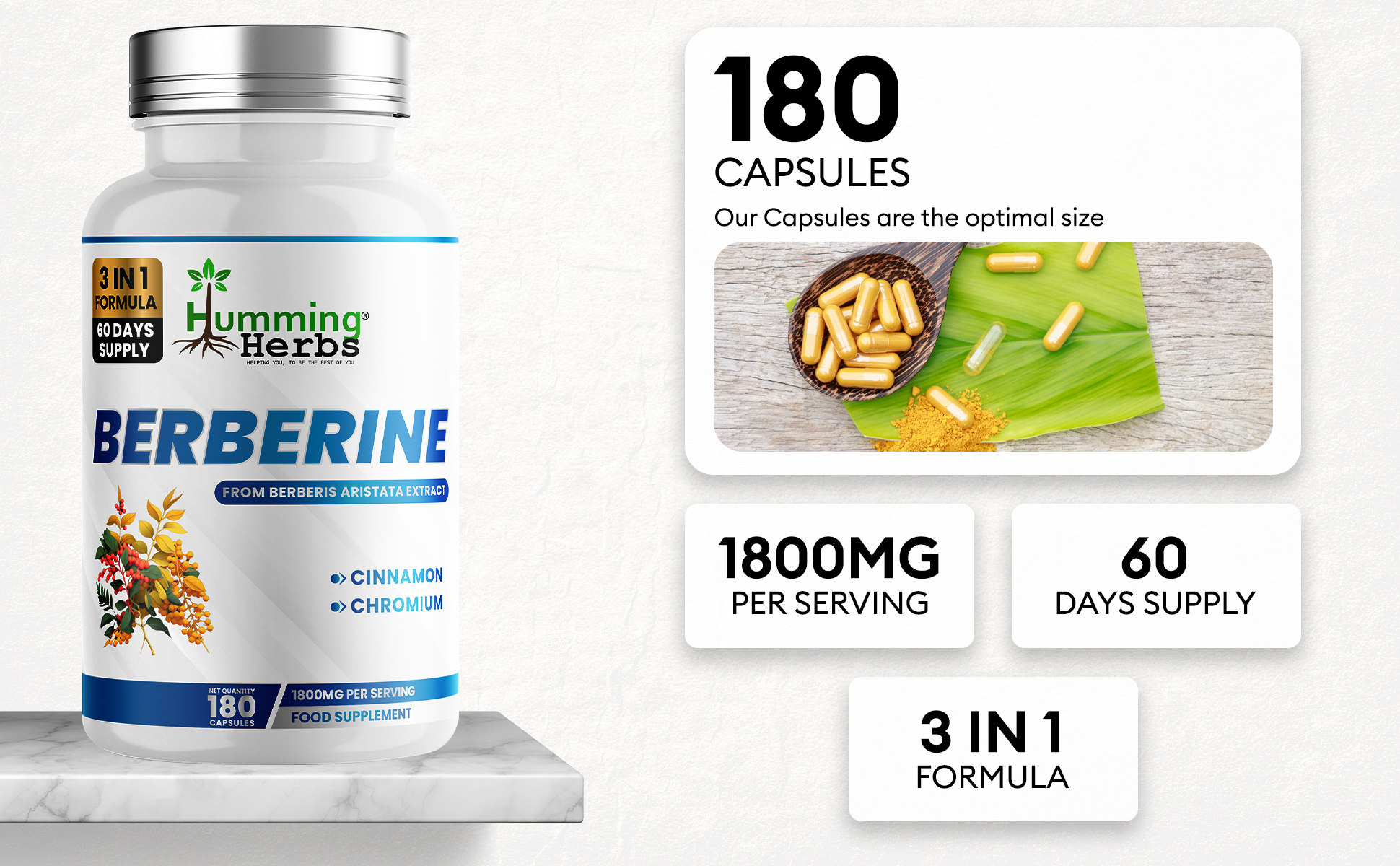
Our berberine is a 3-in-1 — three recognisable ingredients within an 1800 mg daily serving (3 capsules). Here's what's in it, and the honest note on claims:
The chromium connection
Unlike berberine, chromium is a nutrient that carries authorised GB/EU health claims when a serving provides at least 15% of its Nutrient Reference Value:
- Chromium contributes to the maintenance of normal blood glucose levels.
- Chromium contributes to normal macronutrient metabolism.
These claims belong to chromium, not to berberine — but they're the legitimate, label-checkable basis for any "metabolic" or "blood glucose" framing. Always check the Supplement Facts to confirm the chromium amount meets the threshold.
How people take berberine
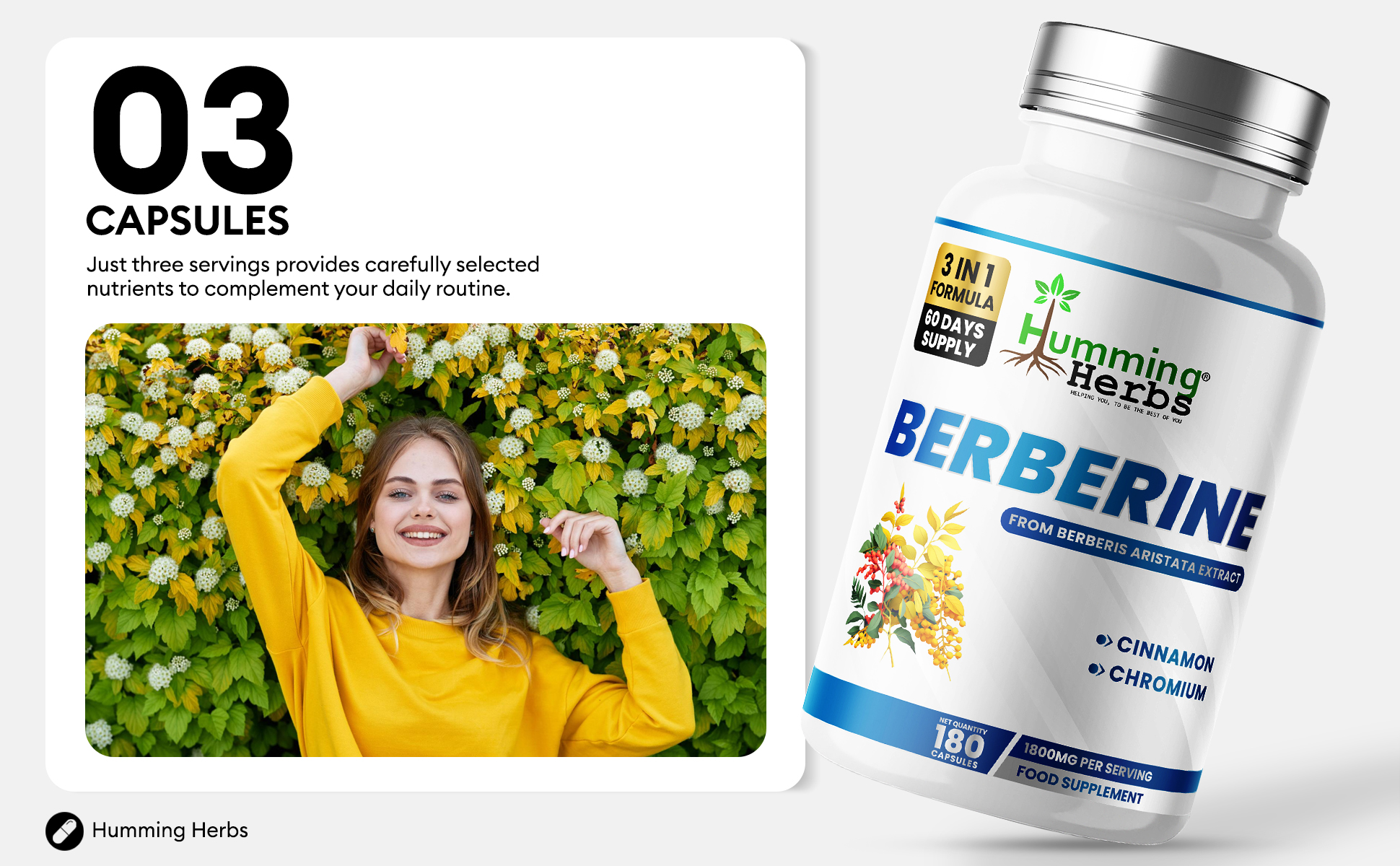
General information, not a personal recommendation — always follow your product's label and ask a pharmacist if unsure. Berberine is commonly taken at around 500 mg, two to three times a day, with meals. Because it has a short half-life, people typically split the dose across the day rather than taking it all at once.
HCl vs dihydroberberine
Berberine HCl is the standard, most-researched form, with relatively low absorption. Dihydroberberine is marketed on better absorption and usually costs more. Both are sold as food supplements.
Safety, interactions & who should be cautious
- Digestive effects — some people notice cramping, constipation or diarrhoea, especially at higher amounts. Taking it with food and splitting doses can help.
- Pregnancy, breastfeeding & infants — avoid. Berberine is specifically not recommended here.
- Before surgery — tell your medical team about any supplements you take.
How to choose a quality berberine supplement
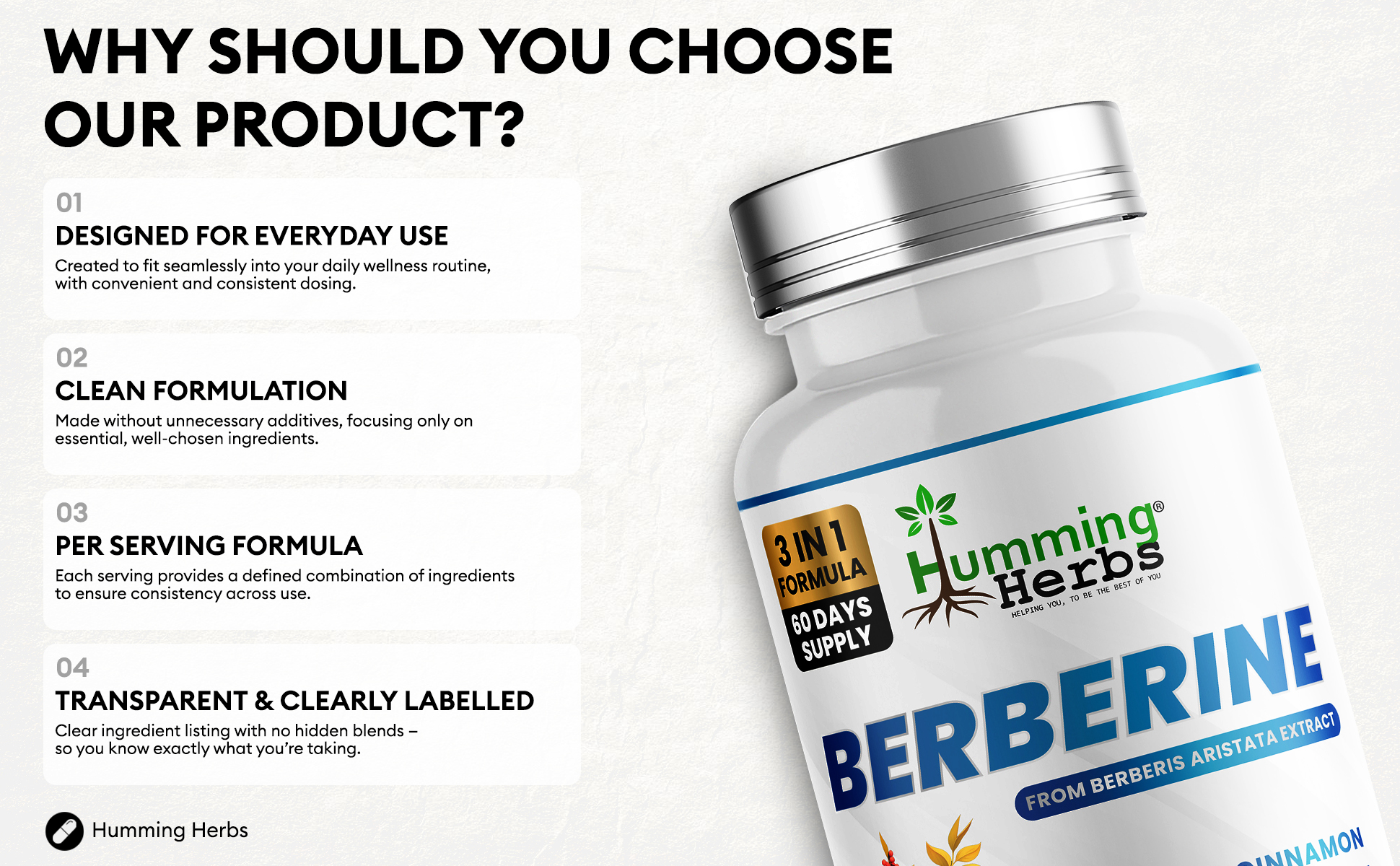
- Strength per serving. Check the actual berberine amount per capsule and per day.
- Form. Berberine HCl (standard) or dihydroberberine — know which you're buying.
- Third-party testing. Independently tested for purity, with a Certificate of Analysis available.
- Sensible added nutrients. Added chromium at a meaningful level brings its own authorised claims.
- GMP manufacture and full ingredient + allergen labelling.
- An honest UK seller — no "nature's Ozempic" hype. Dramatic promises are a red flag, not a feature.
Humming Herbs Berberine 3-in-1
Third-party tested, with berberine paired with Ceylon cinnamon and chromium, which contributes to the maintenance of normal blood glucose levels and to normal macronutrient metabolism. Full Supplement Facts are on the product page.
Frequently asked questions
Is berberine "nature's Ozempic"?
No. Berberine is a food supplement, not a medicine, and it is not a substitute for any prescribed treatment. That nickname sets up a false comparison — if you're considering it for a health condition, speak to your GP or pharmacist.
Can I take berberine with my medication?
Check with your GP or pharmacist first. Berberine can interact with a number of medicines, so this is one to clear before you start.
Is berberine legal to buy in the UK?
Yes — it's sold as a food supplement. As always, choose a clearly labelled, independently tested product.
References & further reading
- Great Britain Nutrition and Health Claims (NHC) Register — the official list of authorised claims, including those for chromium.
- GOV.UK — Nutrition and health claims: guidance to compliance.
- PubMed — research literature on berberine (background reading; not a substantiation of any health claim).
Comments (0)